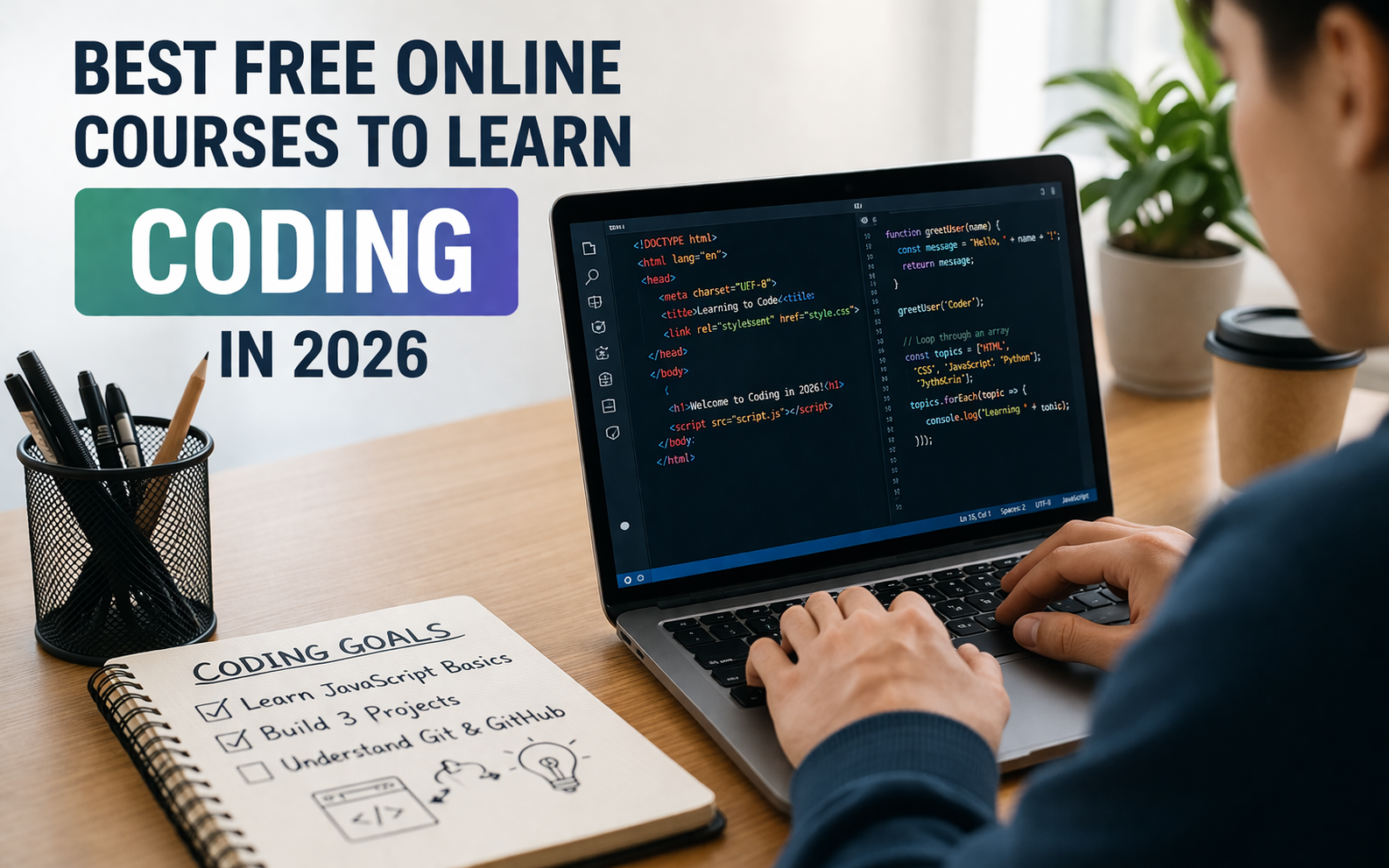
Learning to code in 2026 doesn’t feel the way it used to. A few years ago, it often meant expensive bootcamps, long lectures, and a lot of confusion. Today, things are different. You can sit at home, open your laptop, and access some of the best programming education in the world—for free.
But here’s the catch: there are too many options. And when everything looks good, it’s hard to know where to begin. So instead of listing random courses, let’s talk about the ones that actually help you learnand more importantly, stick with it.
Why Free Courses Are Better Than Ever
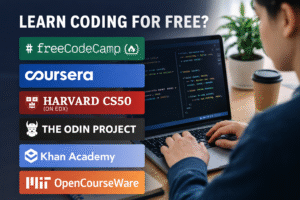
Free resources used to feel limited or outdated. That’s no longer true. Platforms like freeCodeCamp and Coursera now offer structured, high-quality content that rivals paid programs.
The real advantage? You can explore different areas web development, Python, data science without committing money upfront. It gives you freedom to experiment and find what you actually enjoy.
1. freeCodeCamp – Learn by Doing, Not Just Watching
If you’re completely new to coding, freeCodeCamp is one of the best places to start. It doesn’t overwhelm you with theory. Instead, it gets you writing code from day one.
You’ll build real projects like websites and small applications while learning core concepts like HTML, CSS, and JavaScript. By the time you finish, you won’t just “know” coding—you’ll have proof of your skills.
Best for: Beginners who want a clear, hands-on path
2. Coursera – Structured Learning from Top Institutions
Sometimes you want something more organized, something that feels like a real course. That’s where Coursera comes in. It offers programs from universities and companies, and many of them are free if you choose the audit option.
Courses like beginner-friendly Python programs are especially popular because they balance simplicity with depth.
Best for: Learners who prefer guided, academic-style lessons
3. Harvard’s CS50 on edX – A Challenging but Rewarding Start
Harvard University’s CS50, available on edX, is often called one of the best introductory computer science courses in the world—and for good reason.
It’s not the easiest option on this list, but it teaches you how to think like a programmer. You’ll explore multiple languages and solve real problems that push your understanding.
Best for: Serious beginners who want strong fundamentals
4. The Odin Project – Learn Like a Real Developer
If you don’t like passive learning, The Odin Project might be exactly what you need. Instead of spoon-feeding lessons, it encourages you to build projects, search for answers, and learn through practice.
You’ll also get familiar with tools developers use daily, like Git and GitHub. It’s closer to real-world coding than most beginner courses.
Best for: People who want practical, job-ready skills
5. Khan Academy – A Friendly Starting Point
For those who feel intimidated by coding, Khan Academy offers a softer introduction. Its lessons are simple, interactive, and easy to follow.
You can create animations and small programs while learning basic JavaScript, which makes the process feel creative and fun rather than technical.
Best for: Absolute beginners and visual learners
6. MIT OpenCourseWare – Go Beyond Just Coding
If you’re curious about the deeper side of computer science, MIT OpenCourseWare provides free access to real university materials.
This includes lecture notes, assignments, and exams. It’s less guided, but incredibly valuable if you want to understand the “why” behind programming.
Best for: Self-motivated learners who want depth
How to Choose the Right Course
The truth is, the “best” course depends on your learning style.
- If you like step-by-step learning, start with freeCodeCamp
- If you prefer structured lessons, go with Coursera or CS50
- If you want hands-on experience, try The Odin Project
- If you’re just exploring, Khan Academy is a great entry point
There’s no perfect choice only the one you’ll actually stick with.
Learning to code isn’t about finding the perfect resource. It’s about starting, struggling a bit, and improving over time. These free courses remove the biggest barrier—cost—but the real progress comes from consistency.
Pick one platform, commit to it, and give yourself time. A few months from now, you’ll be surprised at how far you’ve come.
And remember: every developer you admire today once started exactly where you are—at the beginning.